
Persistent Mouth Ulcer? When Should You Get It Checked?
Most of us have experienced a mouth ulcer at some point, a small, painful sore that makes eating, talking, or even smiling uncomfortable. In most cases, these ulcers are harmless and resolve on their own within a week or two. But what happens when an ulcer lingers longer than expected? When does it stop being “just a sore” and become something that needs professional attention?
Understanding the difference between a common ulcer and a potentially serious one can make all the difference in early diagnosis and effective treatment.
What Exactly Is a Mouth Ulcer?
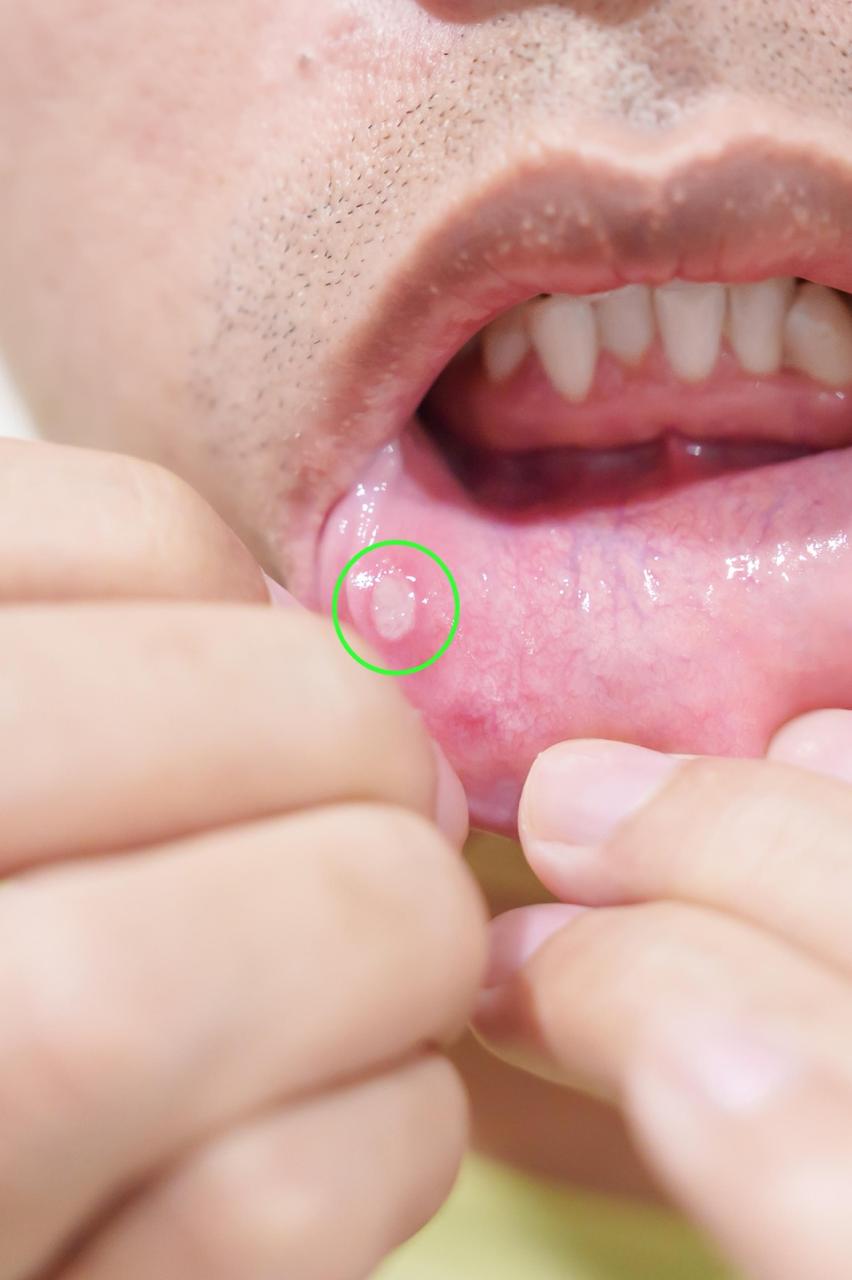
A mouth ulcer, often called an aphthous ulcer, is a break in the lining of the oral mucosa. It typically appears as a round or oval sore with a white, yellow, or grey center and a red border. These ulcers can occur on the inside of the cheeks, lips, tongue, floor of the mouth, or even the gums.
They are usually triggered by factors like minor trauma (accidentally biting your cheek), stress, nutritional deficiencies (like Vitamin B12 or iron), hormonal changes, or certain foods.
Most importantly, they are self-limiting, meaning they heal on their own.
When Is It No Longer “Just an Ulcer”?
The general rule that dentists follow is simple but crucial:
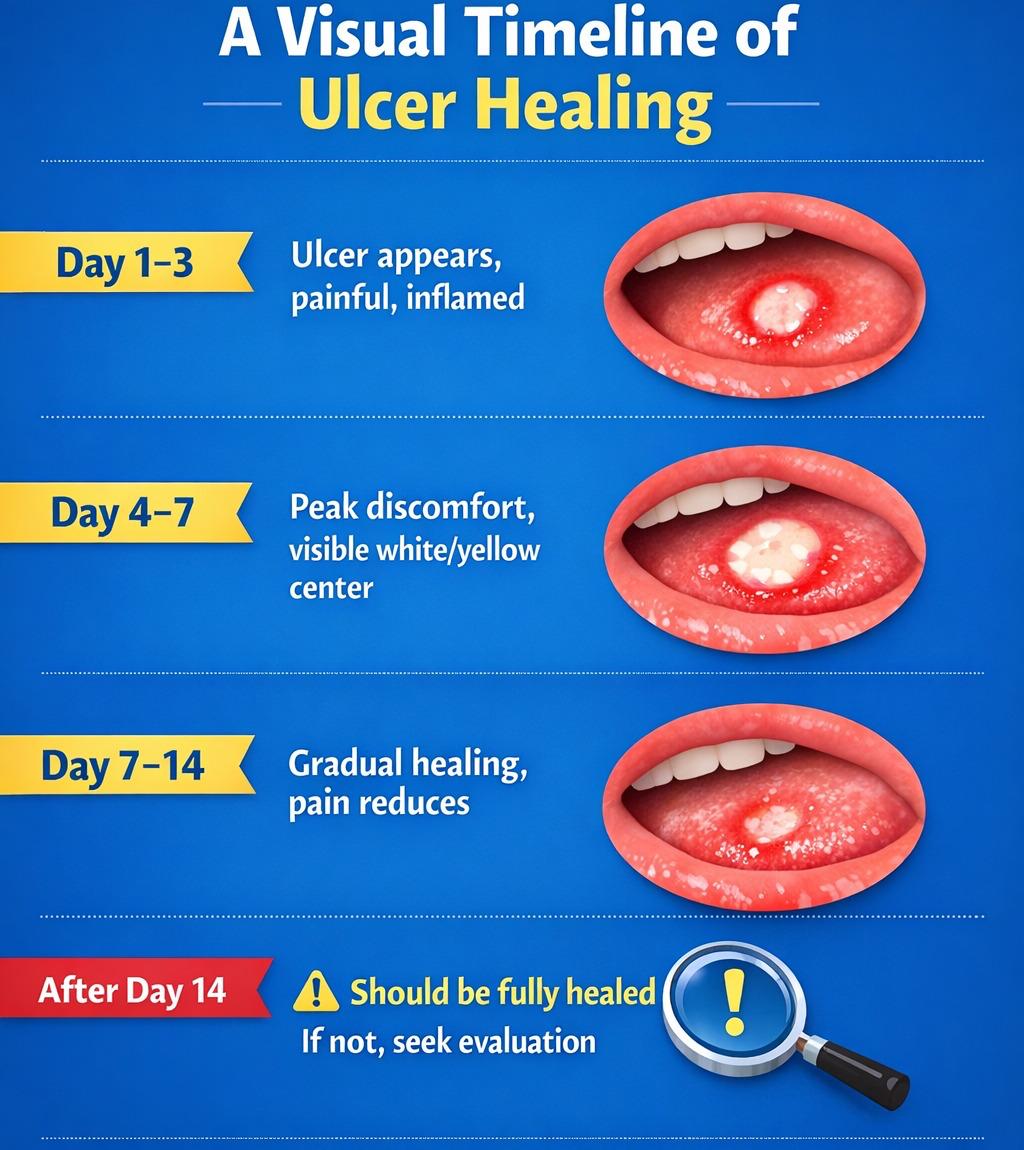
Any mouth ulcer that does not heal within 2 weeks should be evaluated by a dentist or doctor.
This two-week window is important because normal oral tissues have a rapid turnover rate. If healing is delayed, it could indicate something beyond a routine ulcer.
Understanding the Difference
Here’s a simple comparison to help you differentiate between a harmless ulcer and one that needs attention:
| FEATURE | COMMON MOUTH ULCER | CONCERNING MOUTH ULCER |
|---|---|---|
| Duration | Heals in 7-14 days | Persists beyond 2 weeks |
| Pain | Usually painful | May or may not be painful |
| Size | Small and round | Irregular, may grow |
| Edges | Smooth, well defined | Raised, rolled, or indurated |
| Bleeding | Rare | May bleed easily |
| Location | Non specific | May occur in high-risk areas (tongue border, floor of mouth) |
| Recurrence | Occassional | Persistent or worsening |
What Could a Persistent Ulcer Indicate?
While many persistent ulcers still turn out to be benign, some underlying causes need careful evaluation:
- Chronic Trauma: A sharp tooth, ill-fitting denture, or broken filling can repeatedly irritate the same spot, preventing healing.
- Nutritional Deficiencies: Low levels of iron, folate, or Vitamin B12 can delay healing.
- Infections: Viral, bacterial, or fungal infections may present as non-healing ulcers.
- Autoimmune Conditions: Diseases like lichen planus or pemphigus can cause recurrent or persistent oral lesions.
- Potentially Malignant Disorders: Conditions like leukoplakia or erythroplakia may initially resemble ulcers.
- Oral Cancer: One of the most critical conditions to rule out, especially if the ulcer is painless, persistent, and progressively enlarging.
Warning Signs You Should Not Ignore
If you notice any of the following along with a persistent ulcer, it’s best not to delay:
- Difficulty in swallowing or speaking
- A lump in the neck
- Unexplained bleeding from the ulcer
- Numbness or altered sensation
- Red or white patches around the ulcer
- Sudden weight loss
These symptoms don’t always mean something serious, but they definitely warrant investigation.
How Is a Persistent Ulcer Evaluated?
When you visit a dentist, the evaluation is usually straightforward and painless:
- Clinical Examination: The dentist will assess the size, shape, location, and texture of the ulcer.
- History Taking: Questions about duration, habits (like tobacco use), trauma, or systemic health.
- Eliminating Local Causes: Smoothing a sharp tooth or adjusting a prosthesis if needed.
- Biopsy (if required): If the ulcer looks suspicious or doesn’t heal, a small tissue sample may be taken for analysis.
Why Early Detection Matters
Oral cancer, when detected early, has a significantly higher success rate of treatment. Unfortunately, many patients ignore painless ulcers, assuming they are harmless, which delays diagnosis.
A simple check at the right time can prevent complex treatments later.
Final Thoughts
It’s easy to dismiss a mouth ulcer as a minor inconvenience, and most of the time, that’s exactly what it is. But your mouth also has a way of signalling when something isn’t quite right.
If an ulcer overstays its welcome, don’t ignore it.