
Oral Submucous Fibrosis: A Common Precancerous Condition in India
What exactly is Submucous Fibrosis?
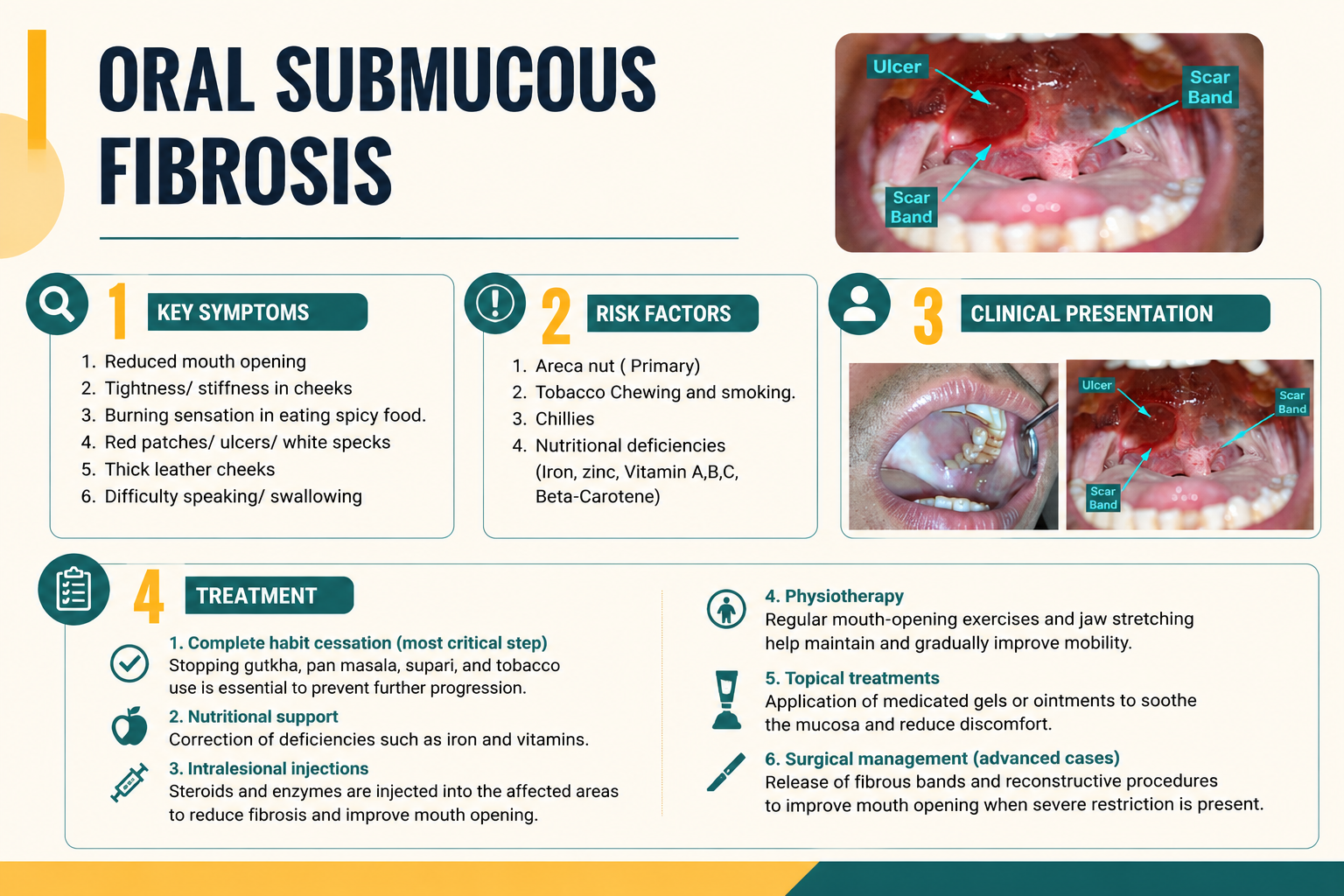
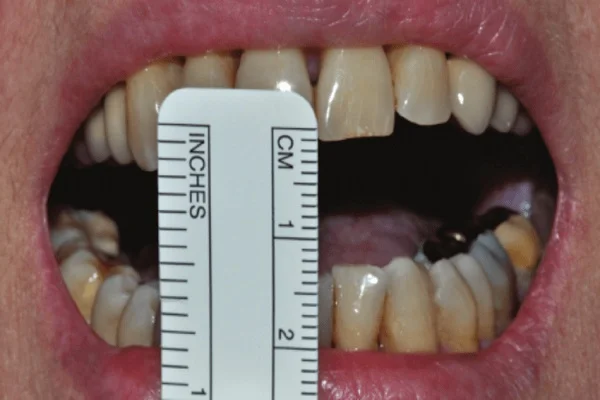
Oral Submucous Fibrosis (OSMF) is a long-standing condition that affects the inner lining of the mouth, making it gradually stiff, thick, and less flexible. For someone experiencing it, the earliest signs may seem harmless, perhaps a slight burning sensation while eating spicy food or a feeling that the cheeks are becoming tight. Over time, however, this tightness progresses to the point where opening the mouth becomes difficult, eating becomes uncomfortable, and even speaking may feel restricted.
To understand it simply, imagine the inside of your cheeks slowly turning into scar-like tissue that refuses to stretch. That is essentially what OSMF does. What makes it particularly important is that it is not just a discomfort-related condition; it is classified as a precancerous disorder, meaning it carries a real risk of developing into oral cancer if ignored.
Why is it so common in India?
OSMF is seen far more frequently in India and other South Asian countries than in the rest of the world, and this is closely tied to cultural and lifestyle habits. The widespread use of gutkha, pan masala, paan, and supari (areca nut) plays a central role. These products are easily available, often marketed attractively, and sometimes even perceived as harmless mouth fresheners.
Scientific research consistently identifies areca nut as the primary cause of this disease. A large body of evidence, including studies published in journals indexed on PubMed Central, shows that compounds like arecoline in areca nut stimulate excessive production of collagen in the oral tissues. This collagen behaves like internal scarring, gradually reducing the elasticity of the mouth lining. India, where a significant portion of the population consumes areca nut in some form, reports prevalence rates ranging from approximately 4% to 6%, making it a major public health concern.
How does the disease develop?
The development of OSMF is gradual and often goes unnoticed in its early stages. When areca nut is chewed regularly, it releases chemicals that trigger the body to produce more collagen than normal. At the same time, the natural breakdown of this collagen is reduced. This imbalance causes collagen to accumulate in the tissues beneath the oral lining, leading to fibrosis, essentially a process similar to internal scarring.
As this fibrosis progresses, the soft, flexible lining of the mouth becomes increasingly rigid. Additional factors such as tobacco use, nutritional deficiencies (especially iron and vitamins), and chronic irritation from spicy food may accelerate the process. Over time, the reduced flexibility manifests as difficulty in opening the mouth, which is one of the hallmark features of this condition.
What are the symptoms people usually notice?
In the beginning, most individuals experience a mild burning sensation in the mouth, particularly when consuming spicy foods. There may also be a feeling of dryness or roughness inside the cheeks. As the condition progresses, the inner lining of the mouth may appear pale or blanched, which is often one of the earliest visible signs.
Gradually, the symptoms become more noticeable and intrusive. People often find that they cannot open their mouth as wide as before. Eating becomes slow and uncomfortable, and speaking for long durations may feel tiring. In more advanced stages, even swallowing can become difficult, and weight loss may occur simply because eating becomes such a challenge. Studies have shown that reduced mouth opening is one of the most common findings, seen in a majority of patients diagnosed with OSMF.
Why is it considered dangerous?
The most serious aspect of OSMF is its potential to transform into oral cancer. It is categorized as an Oral Potentially Malignant Disorder (OPMD), which means that while not cancer itself, it carries a measurable risk of becoming cancerous over time. Research studies indicate that approximately 3% to 6% of individuals with OSMF may eventually develop oral cancer.
This risk is not uniform for everyone. It increases significantly when areca nut chewing is combined with tobacco use, or when the habit continues for many years without interruption. What makes this particularly concerning is that many individuals continue the habit even after symptoms begin, unknowingly increasing their risk.
Can it be reversed?
One of the more difficult realities about OSMF is that once the fibrosis has set in, it is largely irreversible. The changes that occur in the tissue are similar to scar formation, and scar tissue does not easily return to its original state. However, this does not mean that nothing can be done.
If the condition is identified early and the habit causing it is stopped immediately, the progression can be slowed or even halted. Symptoms such as burning sensation and mild stiffness may improve with treatment. This makes early diagnosis and intervention extremely important.
How is it treated and managed?
Management of OSMF focuses on controlling symptoms and preventing further progression. The most critical step is complete cessation of areca nut, gutkha, or any related products. Without this, no treatment is truly effective.
Medical therapies may include antioxidants and medications that help reduce inflammation and improve tissue flexibility. In some cases, injections are used to break down fibrous tissue and improve mouth opening. Physiotherapy, including regular mouth-opening exercises, plays a significant role in maintaining function. In advanced cases where mouth opening is severely restricted, surgical intervention may be required to release the fibrous bands and restore mobility.
The Bigger Picture: Prevention
OSMF is a preventable disease, and that is what makes it both concerning and hopeful at the same time. The strong link between the condition and areca nut consumption means that reducing or eliminating this habit can significantly decrease its occurrence.
Public awareness is crucial. Many people are still unaware that products like pan masala or supari, even without tobacco, are harmful. Educational initiatives, especially among younger populations, can play a key role in reducing new cases. Routine dental check-ups also provide an opportunity for early detection, often before severe symptoms develop.
Submucous Fibrosis is not just a minor oral condition, it is a progressive, potentially dangerous disease that affects both quality of life and long-term health. It develops silently, often starting with symptoms that are easy to ignore, but can lead to significant complications if left unchecked.
The most powerful step anyone can take is simple: avoid or stop the use of areca nut in any form. Because when it comes to OSMF, prevention is not just better than cure, it is often the only true cure.